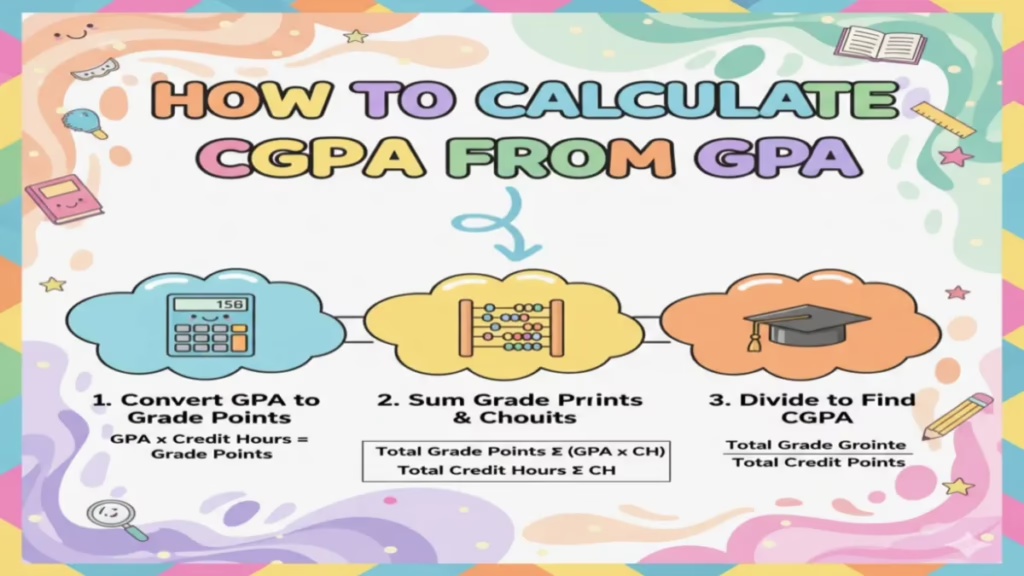
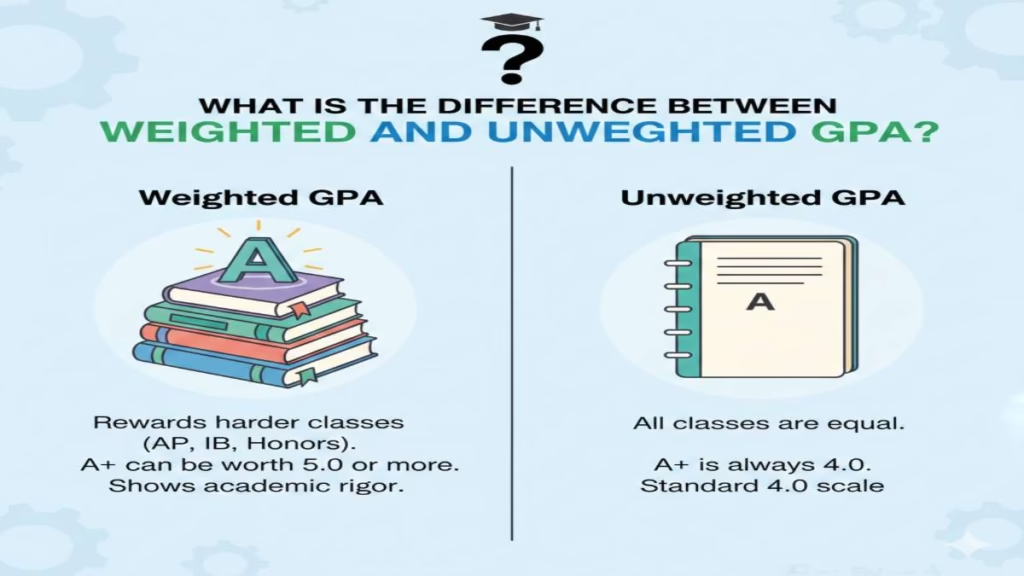
Understanding your grade point average meaning is the first step toward planning your future. If you are looking at your transcript and seeing two different numbers, you aren’t alone. Many students ask: what is the difference between weighted and unweighted GPA?
difference between weighted and unweighted gpa
This guide breaks down everything you need to know about these scores, how they affect your college journey, and how to read your academic performance measurement correctly.
Understanding GPA (Grade Point Average)
In simple terms, a GPA is a number that summarizes how well you did in your classes. It is a standard academic performance measurement used across the United States.
Why GPA is important in the education system boils down to efficiency. It gives colleges and employers a quick snapshot of your hard work. However, there is a significant difference in academic grading systems between schools. Some schools use a simple scale, while others use a complex one to reward students taking tougher classes.
What Does Unweighted GPA Mean?
The unweighted vs weighted GPA definition starts with understanding the simpler one first. An unweighted GPA treats all classes equally, regardless of difficulty.
This section explains what does unweighted GPA mean in plain language. Grades are calculated on a fixed scale, usually A to F, without bonus points.
The standard high school GPA scale for this method is capped at 4.0. Teachers calculate results using a basic formula, which answers how is unweighted GPA calculated.
The unweighted GPA scale (4.0 scale explained) is the most common. In this system:
- A = 4.0
- B = 3.0
- C = 2.0
- D = 1.0
- F = 0.0
This method allows a basic high school GPA comparison between students who take similar course levels.
What Does Weighted GPA Mean?
To understand advanced grading, we explain what does weighted GPA mean using simple examples. A weighted GPA gives extra value to harder classes.
The weighted vs unweighted GPA meaning becomes clearer when you see that honors and advanced courses carry extra points. This creates a weighted grading scale vs unweighted structure.
Many schools use different scales, showing GPA scale differences (4.0 vs 5.0 scale). Because of this, students often ask can your GPA be higher than 4.0, and the answer is yes under weighted systems.
How Is Weighted GPA Calculated? (Step-by-Step)
The calculation might seem tricky, but it follows a clear logic. Here’s a step-by-step look:
- Assign a point value to each grade, factoring in course difficulty. A common scale is:
- Standard Class: A=4, B=3, C=2, D=1
- Honors/Advanced Class: A=4.5, B=3.5, C=2.5
- AP/IB Class: A=5.0, B=4.0, C=3.0
- Multiply each class grade’s point value by the number of credits the course is worth (usually 1 credit per year-long class).
- Add up all the total points from every class.
- Divide that sum by your total number of credits.
The impact of an Honors course weighted GPA boost or AP course GPA weighting becomes clear here, pulling your average above the standard 4.0 ceiling.
If you want to calculate your GPA instantly, you can use our online GPA calculator to enter grades and get accurate results in seconds:
👉 https://gpatocgpa.com/online-calculator-for-gpa/
How Is Unweighted GPA Calculated? (Step-by-Step)
This is a more uniform process:
- Convert each final letter grade to its standard point value (A=4, B=3, C=2, D=1, F=0).
- Add all these point values together.
- Divide the total by the number of classes you took.
The result is your cumulative GPA on a 0 to 4.0 scale. It’s a pure average of your grades, with no bonus for difficulty.
To clearly understand how GPA and CGPA are different, especially for semester-based systems, read this simple explanation here:
👉 https://gpatocgpa.com/what-is-the-difference-between-gpa-and-cgpa/
Weighted vs Unweighted GPA – Side-by-Side Comparison
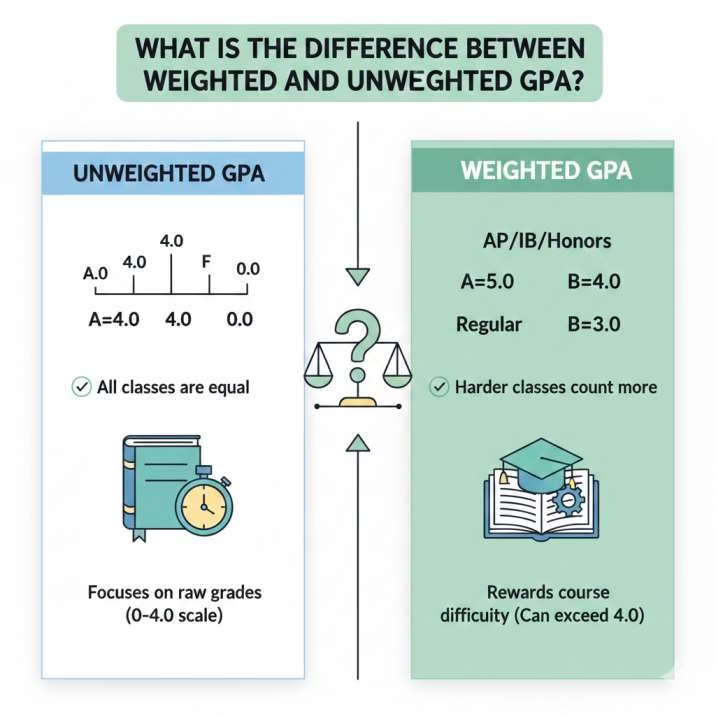
Let’s put them side by side to highlight the core distinctions.
| Feature | Unweighted GPA | Weighted GPA |
|---|---|---|
| Scale | 0.0 to 4.0 | 0.0 to 5.0 (or higher) |
| Course Difficulty | Not considered | Factored in (Honors, AP, IB get extra points) |
| Maximum GPA | 4.0 | Can exceed 4.0 |
| Purpose | Shows pure academic letter grade average | Reflects both grades and academic rigor |
| Calculation | Simpler, uniform | More complex, varies by school |
This weighted vs unweighted GPA overview shows that while one measures your grades, the other measures your effort and challenge level. This weighted vs unweighted GPA academic guide helps you realize that weighted and unweighted GPA side by side tell two different stories about the same student.
Weighted vs Unweighted GPA With Examples
Imagine two students, Sarah and Mia, in the same semester:
- Sarah’s Classes: English (A), Algebra (A), Biology (A), Spanish (A), Art (A).
- Mia’s Classes: AP English (A), Honors Algebra (A), AP Biology (A), Spanish (A), Art (A).
Both have perfect unweighted GPAs of 4.0. However, Mia’s weighted GPA would be higher—let’s say 4.6—because her A’s in AP and Honors classes are worth more points. On a high school transcript, this tells a more complete story of Mia’s academic effort.
Why Do Schools Use Weighted and Unweighted GPA Systems?
Schools use both to serve different purposes. The unweighted figure provides a baseline, showing a student’s raw performance. The weighted number adds crucial context about the intensity of a student’s course load. The purpose of GPA weighting is to create fairness in academic evaluation, ensuring a student who challenges themselves isn’t penalized with a lower average compared to a student with the same grades in easier classes.
Pros and Cons of Weighted vs Unweighted GPA
There are weighted vs unweighted GPA pros and cons for both systems.
Weighted GPA benefits:
- Reflects the rigor of your schedule.
- Helps with class ranking in competitive schools.
Unweighted GPA benefits:
- Provides a universal standard.
- Easier for all colleges to compare students from different states.
When each GPA system is useful depends on who is looking at it—your local school board or a national scholarship committee.
Weighted vs Unweighted GPA Impact on College Admissions
This is the million-dollar question: Do colleges care about weighted or unweighted GPA?
The short answer is they look at both, but context is key. Admissions officers are experts at evaluating transcripts. They often recalculate GPAs based on their own standards to level the playing field. They want to see a strong unweighted GPA (indicating consistent performance) paired with a rigorous course load that results in a high weighted GPA. For highly selective colleges, challenging courses are vital.
What GPA Type Matters More for Scholarships?
When asking what GPA type matters more for scholarships, the answer varies. Some local scholarships use the weighted score to reward the top-ranked students.
However, many national programs look at the unweighted vs weighted GPA definition to find a baseline. How scholarship committees evaluate GPA often involves looking at the unweighted number first, then checking the weighted score to see if you took tough classes. The weighted vs unweighted GPA importance is usually secondary to your test scores and essays.
How to Convert Weighted GPA to Unweighted GPA
If you need to know how to convert weighted GPA to unweighted GPA, you simply “strip away” the bonus points.
Common conversion methods:
- Change every ‘A’ back to a 4.0, every ‘B’ to a 3.0, etc., regardless of whether the class was AP or Honors.
- Re-average the new numbers.
When conversion is required: This usually happens when applying to out-of-state colleges or specific summer programs that require a standard high school GPA scale for all applicants.
Which GPA Is Better for Students?
Does weighted GPA matter more than unweighted? Not necessarily. The best way to explain weighted vs unweighted GPA for students is that unweighted shows your consistency, while weighted shows your ambition.
When choosing courses wisely (honors, AP, IB), you should strive for a balance. Don’t take so many weighted classes that your unweighted GPA drops to a 2.0. Aim for the highest rigor you can handle while maintaining high marks.
GPA Grading Systems Explained
Not all schools calculate these numbers the same way. The high school GPA scale can vary by district, state, or educational board (like IB vs. AP). This is why the terminology on your academic transcript is so important—it explains the system your school uses. Always check your school’s specific policy to understand your own numbers.
Conclusion
In this comparative guide to weighted and unweighted averages, we saw that both indicators have their uses. The main difference lies in how they value difficulty.
While the distinction between weighted and unweighted averages may seem complex at first, simply remember: the unweighted average reflects your grades, while the weighted average reflects the effort you put in. Strive to do your best in the most challenging courses, and both indicators will reflect your success.
Frequently Asked Questions
If you are looking for all GPA and CGPA calculation tools in one place, this page lists every calculator you may need:
👉 https://gpatocgpa.com/all-gpa-cgpa-calculators/
To convert semester GPA into cumulative results, you can use the GPA to CGPA calculator available here:
👉 https://gpatocgpa.com/gpa-to-cgpa-calculator/