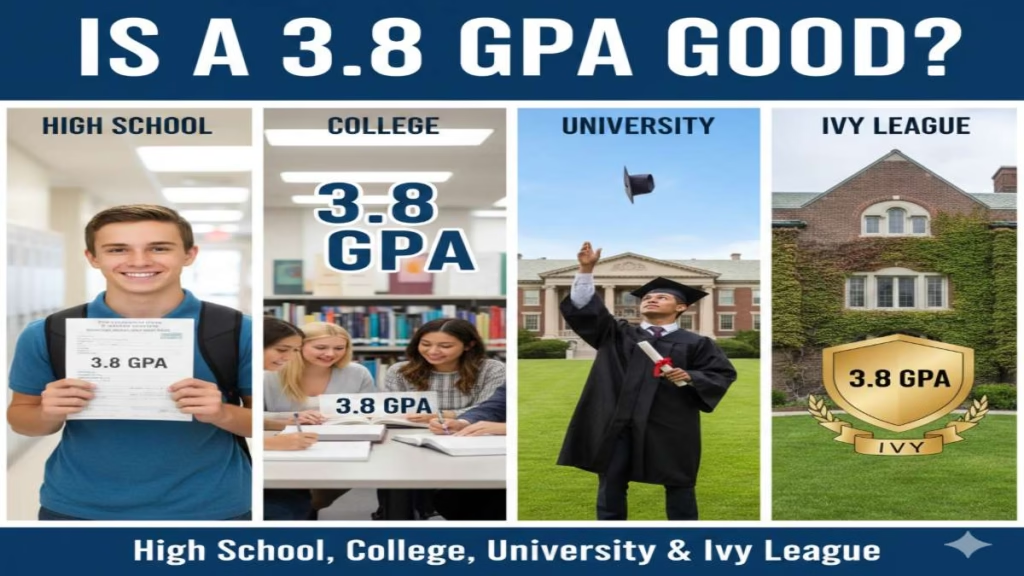
When students or parents see a 3.8 GPA on a report card, the first reaction is often mixed. Some feel proud, while others wonder if it is good enough for competitive colleges, professional schools, or long-term academic goals. The truth is that this number represents a very strong academic performance, but its real value depends on context.
A GPA close to 4.0 usually reflects consistent effort, solid understanding of coursework, and strong study habits. Across most education systems, a 3.8 places a student among the top performers. However, expectations change depending on whether the student is in middle school, high school, college, or preparing for professional programs.
Let’s break it down clearly, level by level.
Understanding What a 3.8 GPA Represents
On a standard 4.0 grading scale, a 3.8 generally means:
- Mostly A grades with an occasional A- or B+
- High consistency rather than short-term cramming
- Strong academic discipline
In practical terms, students with this GPA are usually:
- Above the average student
- Academically reliable
- Well-positioned for future opportunities
That said, GPA is never evaluated in isolation. Schools and programs also look at course difficulty, trends over time, and overall academic rigor.
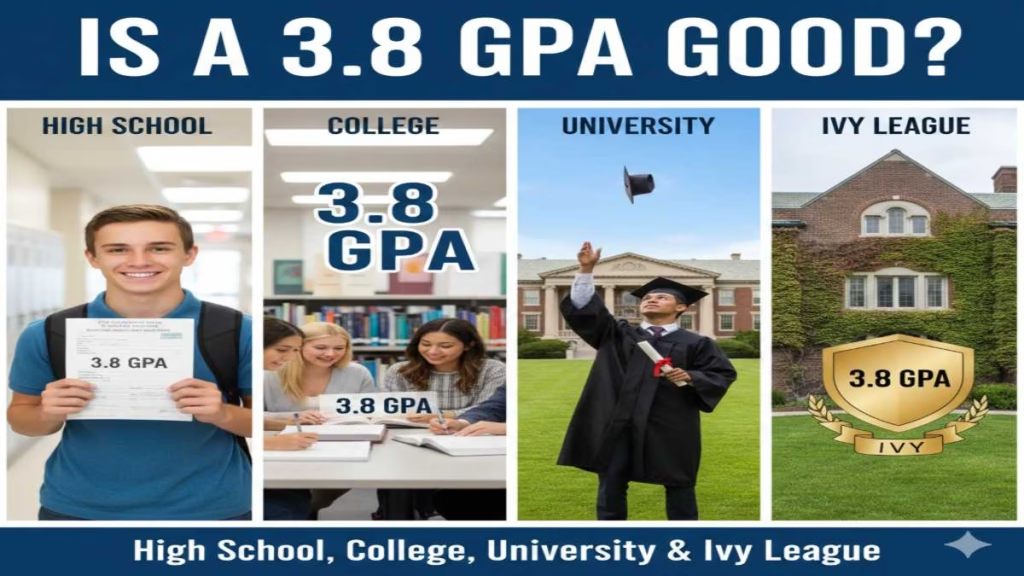
Is a 3.8 grade point average Good in Middle School?
In middle school, grades are more about building habits than final outcomes.
6th and 7th Grade
At this stage, earning a GPA around 3.8 shows:
- Excellent adjustment to structured learning
- Strong reading, math, and comprehension skills
- Early academic maturity
While colleges will not review middle school transcripts, these years lay the foundation for high school success. A student performing at this level is usually placed into advanced or honors tracks later.
8th Grade
By 8th grade, grades begin to matter more for:
- High school course placement
- Honors or accelerated programs
A GPA in this range suggests the student is ready for higher academic challenges and can handle increased workload.
Is a 3.8 GPA Good in High School?
Yes — and in most cases, it is excellent.
High school grading is more demanding, and a GPA near the top of the scale often places a student in the upper portion of their class.
Freshman Year (9th Grade)
For a freshman, this GPA signals:
- A strong transition from middle school
- Good time management and study habits
- Early college readiness
Colleges like to see strong performance starting early, as it suggests long-term consistency rather than last-minute improvement.
Sophomore Year (10th Grade)
At this level:
- Courses become more challenging
- Teachers expect deeper understanding
Maintaining a GPA in this range shows academic stability and readiness for advanced coursework in later years.
Junior and Senior Years
During these years, grades carry the most weight in college admissions. Students with a grade point average around 3.8 are often:
- Competitive applicants at selective universities
- Eligible for merit-based scholarships
- Strong candidates for honors programs
Is a 3.8 GPA Good in College?
College grading standards are stricter than high school, so this level of performance is especially impressive.
A GPA in this range often means:
- Consistent placement on the Dean’s List
- Strong performance across core and major-specific courses
- High academic credibility with professors and advisors
For most institutions, anything above 3.7 is considered academically outstanding and can open doors to internships, research opportunities, and scholarships.
Is a 3.8 grade point averageA Good in Community College?
Yes, and it can be extremely valuable.
Students at community colleges often aim to:
- Transfer to four-year universities
- Earn scholarships after transfer
A GPA near the top of the scale:
- Strengthens transfer applications
- Demonstrates readiness for university-level rigor
- Makes competitive programs more accessible
For many students, this academic record becomes a powerful second chance or stepping stone.
Is a 3.8 GPA Good Enough for Ivy League Schools?
A GPA in this range falls within the competitive academic profile of Ivy League applicants.
However, these institutions evaluate applications holistically. Along with grades, they consider:
- Course difficulty (AP, IB, honors)
- Academic trend over time
- Essays and recommendations
- Extracurricular impact and leadership
What About Harvard Specifically?
A GPA close to 4.0 meets the academic expectation, but admission is never guaranteed based on grades alone. Strong academics must be supported by depth, originality, and demonstrated impact outside the classroom.
Is a 3.8 grade point average Good for Medical School?
Yes — it is above the average accepted GPA for many medical schools.
Admissions committees also evaluate:
- MCAT scores
- Clinical exposure
- Research experience
- Personal statements
Academically speaking, students with this GPA are well-positioned, especially if their science coursework is strong.
Is a 3.8 grade point average Good for Law School?
Law schools consider GPA alongside LSAT scores.
From an academic standpoint:
- This GPA is competitive for many respected law programs
- It reflects strong analytical and writing skills
When paired with a solid LSAT score, it can significantly strengthen an application.
Is a 3.8 GPA Good for Graduate School?
For most graduate programs, the minimum grade point average requirement is much lower than 3.8.
A GPA at this level:
- Exceeds standard admission thresholds
- Improves chances for funded programs
- Signals strong academic discipline and research readiness
Programs in education, business, science, and social sciences all view this as a strong academic indicator.
Is a 3.8 grade point average Good for Nursing School?
Nursing programs are often competitive due to limited seats.
A GPA in this range:
- Meets or exceeds admission requirements
- Reflects strong performance in science prerequisites
- Improves acceptance chances in selective programs
Key Factors That Matter Beyond GPA
While grades are important, they are only part of the picture. Institutions also consider:
- Course rigor
- Improvement or consistency over time
- Standardized test scores (when required)
- Practical experience and extracurricular involvement
A strong GPA works best when paired with purpose, curiosity, and engagement.
Final Thoughts
A 3.8 GPA represents dedication, consistency, and academic strength across nearly all education levels. Whether the student is in middle school, high school, college, or preparing for professional programs, this level of performance reflects strong potential.
The real advantage comes from using that academic strength wisely — choosing challenging courses, developing real-world skills, and maintaining steady progress. When combined with thoughtful planning and effort, a GPA in this range can open many academic and professional doors.
Helpful GPA Guides You May Want to Read
If you’re exploring GPA, percentages, scholarships, or college requirements, the following guides can help you understand everything step by step. Each article explains a specific topic clearly, so you can find exactly what you need without confusion.
- Want to see how a 3.7 GPA converts into percentage? Read this simple explanation here:
👉 https://gpatocgpa.com/convert-3-7-gpa-to-percentage/ - If you’re checking how a 3.0 GPA looks in percentage form, this guide breaks it down clearly:
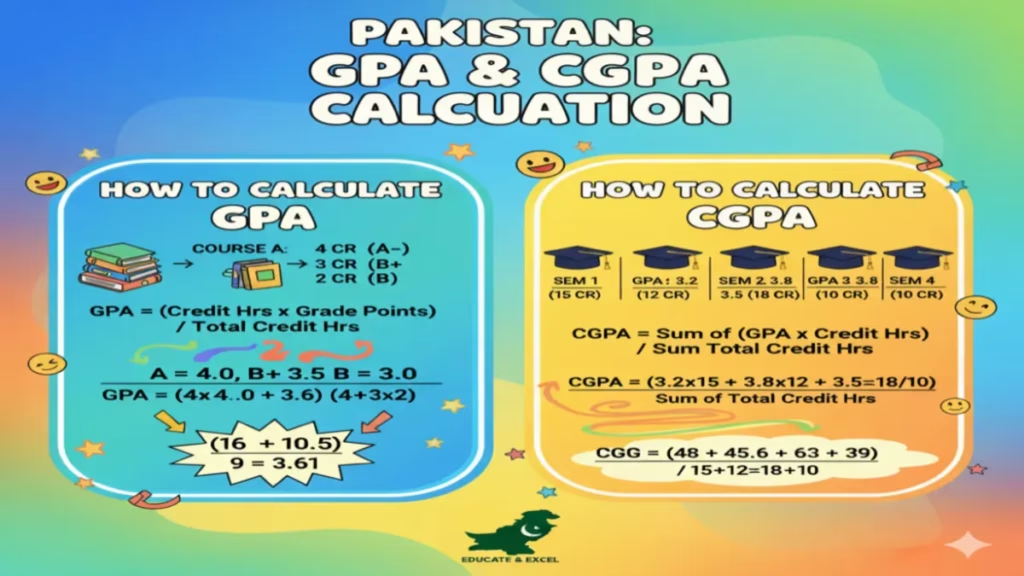
👉 https://gpatocgpa.com/3-gpa-to-percentage/ - Not sure how your overall GPA is calculated across semesters? This article explains how to calculate cumulative GPA in an easy way:
👉 https://gpatocgpa.com/how-to-calculate-cumulative-grade-point-average-gpa/ - If scholarships are your goal, this guide explains how much GPA is required for different scholarships:
👉 https://gpatocgpa.com/how-much-gpa-is-required-for-a-scholarship/ - Curious about which grades actually matter for admissions? Learn what GPA colleges really look at here:
👉 https://gpatocgpa.com/what-gpa-do-colleges-look-at/ - If your system uses CGPA and you need percentages, this article shows how to convert CGPA into percentage (out of 4):
👉 https://gpatocgpa.com/how-to-convert-cgpa-into-percentage-out-of-4/ - Confused between GPA and CGPA? This guide clearly explains the difference between GPA and CGPA:
👉 https://gpatocgpa.com/what-is-the-difference-between-gpa-and-cgpa/ - Prefer tools over manual calculations? Use this GPA to CGPA calculator for quick results:
👉 https://gpatocgpa.com/gpa-to-cgpa-calculator/ - To explore all available tools in one place, visit the complete list of GPA and CGPA calculators:
👉 https://gpatocgpa.com/all-gpa-cgpa-calculators/